Gropweb: 3D
News Update
Loading...
‏إظهار الرسائل ذات التسميات 3D. إظهار كافة الرسائل

الأحد، 27 فبراير 2022

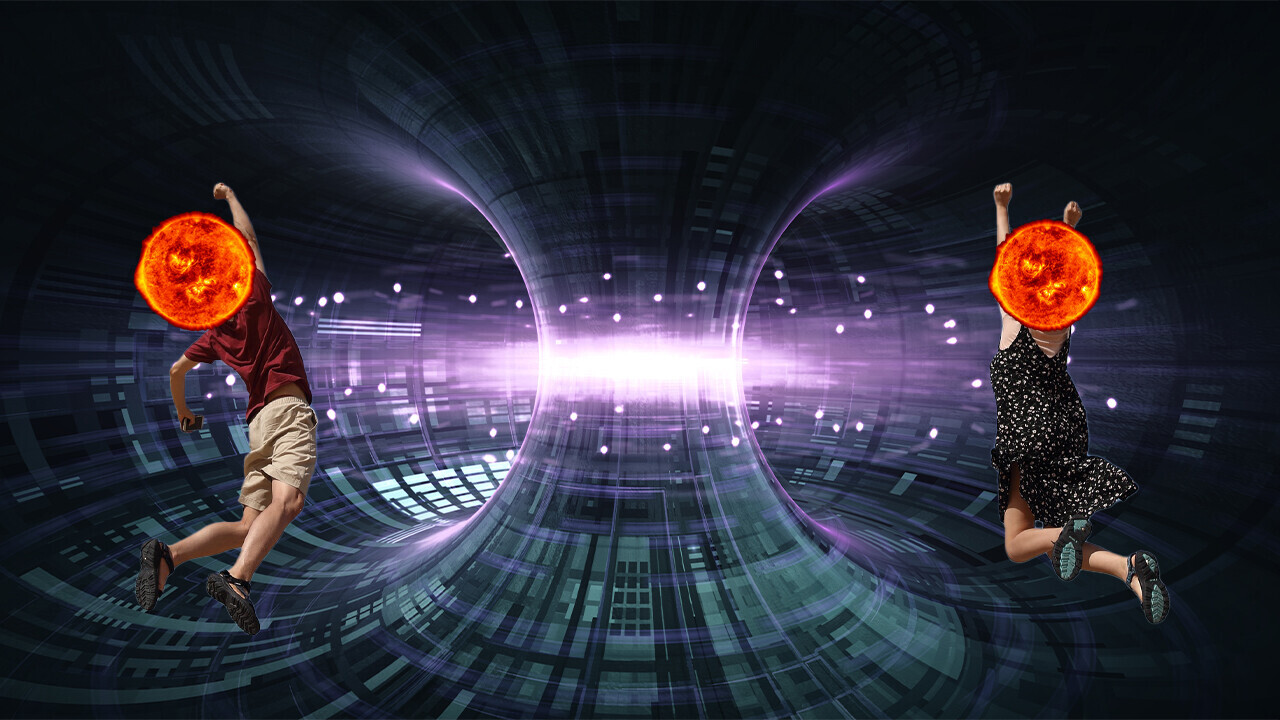
Nuclear fusion is coming — and we should be jumping with glee

Nuclear fusion is coming — and we should be jumping with glee

 Nuclear fusion is coming — and we should be jumping with glee

There’s been tremendous excitement about recent results from the Joint European Torus (JET) facility in the UK, hinting that the dream of nuclear fusion power is inching closer to reality. We know that fusion works – it is the process that powers the Sun, providing heat and light to the Earth. But for decades it has proved difficult to make the transition from scientific laboratory experiments to sustained power production.


The fundamental aim of fusion is to bring atomic nuclei merging to create a different, heavier nucleus – releasing energy in the process. This is different from nuclear fission, in which a heavy nucleus such as uranium is split into smaller ones while also releasing energy.


A significant difficulty has been the process of fusing light atoms, isotopes of hydrogen or helium, together. As they are electrically charged, repulsing each other, they resist fusing unless nuclei are moving fast enough to get physically very close to each other – requiring extreme conditions. The Sun achieves this at its core thanks to its immense gravitational fields and its huge volume.


How to get digital transformation right

3 mindset shifts your company needs to digitally transform


One approach used in labs on Earth is “inertial confinement”, whereby a tiny fusion fuel pellet around one-tenth of a centimeter in diameter is heated and compressed from the outside using laser energy. In recent years, some encouraging progress on this technique has been made, perhaps most notably by the National Ignition Facility in the USA where a 1.3 million Joules (a measure of energy) fusion yield was reported last year. While this produced a 10 quadrillion Watts of power, it only lasted for a fraction (90 trillionths) of a second.


Another technique, “magnetic confinement”, has been deployed more broadly in laboratories worldwide, and is thought to be one of the most promising routes to realizing fusion power stations in the future. It involves using fusion fuel contained in the form of a hot plasma – a cloud of charged particles – confined by strong magnetic fields. In creating the conditions for fusion reactions to take place, the confinement system needs to keep the fuel at the appropriate temperature and density, and for sufficient time.


Herein lies a significant part of the challenge. The small amount of fusion fuel (typically just a few grams) needs to be heated to huge temperatures, of the order of 10 times hotter than the center of the Sun (150 million °C). And this needs to happen while maintaining confinement in a magnetic cage to sustain an energy output.


Internal view of the JET tokamak. EFDA-JET/wikipedia, CC BY-SA

Internal view of the JET tokamak. EFDA-JET/wikipedia, CC BY-SA

Various machines can be used to try to retain this magnetic confinement of the plasma, but the most successful to date is the so-called “tokamak” design, which uses a torus (doughnut shape) and complex magnetic fields to confine the plasma, as employed at the JET facility.


Small step or big leap?

The recent results mark a real stepping stone in the quest for fusion power. The 59 million Joules of energy in total, produced over five seconds, gave an average fusion power of around 11 million Watts. While this is only enough to heat about 60 kettles, it is nevertheless impressive – creating an energy output 2.5 times the previous record, set back in 1997 (also at the JET facility, achieving 22 million Joules).


The success at JET is the culmination of years of planning and a highly experienced team of dedicated scientists and engineers. JET is currently the largest tokamak in the world and the only device that can make use of both deuterium and tritium fuel (both isotopes of hydrogen).


The design of the machine, using copper magnets that heat up rapidly, means that it can only operate with plasma bursts of up to a few seconds. To make the step to longer sustained high-power operations, superconducting magnets will be needed.


Luckily, this is the case at the ITER facility, currently being built in the south of France as part of an international effort involving 35 nations, which is now 80% complete. The recent results have therefore given great confidence in the engineering design and physics performance for the ITER machine design, also a magnetic confinement device, which is designed to produce 500 million Watts of fusion power.


Other important challenges remain, however. These include developing appropriately durable materials that can withstand the intense pressure within the machine, handling the huge power exhaust, and, most importantly, generating energy that is economically competitive with other forms of energy production.


Achieving notable power outputs and sustaining them for more than very short periods has proved to be the major challenge in fusion for decades. Without this ultimately being solved, an eventual fusion powerplant simply cannot be made to function. This is why the JET results represent a significant landmark, albeit just marking a step along the way.


Image of ITER construction in 2018.

ITER construction in 2018. Oak Ridge National Laboratory

The giant leap will come with scaling up of the current fusion achievements in subsequent fusion systems, such as ITER, and then in demonstration power plants beyond this. And this should be within reach in the not too distant future, aiming for operation by the 2050s or possibly slightly earlier.


Crucial benefits

There’s a lot at stake. Fusion produces more energy per gram of fuel than any other process that could be achieved on Earth. Some of the main benefits of fusion are that the products of the process are helium and neutrons (particles that make up the atomic nucleus, alongside protons) – no carbon dioxide or other greenhouse gases are released. The raw fuels are deuterium, which can be found in seawater, and lithium – which is also abundant and found in vast salt flats. The potential fusion energy released from the lithium contained in one laptop battery and a bathtub of water is estimated to be equivalent to around 40 tonnes of coal.


Fusion does produce some radioactivity in the materials comprising the reactor. But this isn’t expected to be anywhere near as long-lived or intense as the

radioactive waste produced by nuclear fission – making it potentially a safer and more palatable choice than conventional nuclear power.


Ultimately, Rome wasn’t built in a day. Various other aspects of human ingenuity, such as aviation, have historically taken significant amounts of time to progress to fruition. That means steps along the way which make progress are hugely important and should rightly be celebrated.


Fusion is creeping inexorably forward and we are getting closer and closer to achieving that once distant dream of commercial fusion power. One day, it will provide a near limitless supply of low-carbon power for many future generations to come. So while it is not quite there yet, it is coming. The Conversation

Article by Paul Norman, Senior Lecturer in Nuclear Physics, University of Birmingham and Lee Packer, Applied Radiation Physics Section Leader, Culham Centre for Fusion Energy


This article is republished from The Conversation under a Creative Commons license. Read the original article.
Meta filed a patent for ‘3D conversations’ — are holographic calls almost here?

Meta filed a patent for ‘3D conversations’ — are holographic calls almost here?

 Meta filed a patent for ‘3D conversations’ — are holographic calls almost here?

Ever since Star Wars first showed space wizards talking to holograms, calling someone and chatting with their 3D simulacrum has become a staple of science fiction. But based on a patent application published in January, it sure looks like FacebookMeta is trying to make 3D conversations a reality right now — even if not quite the way George Lucas envisioned it.


With the disclaimer that many patents never end up becoming an actual product, the patent does hint at how Meta envisions the future of communication.


What’s the patent about?

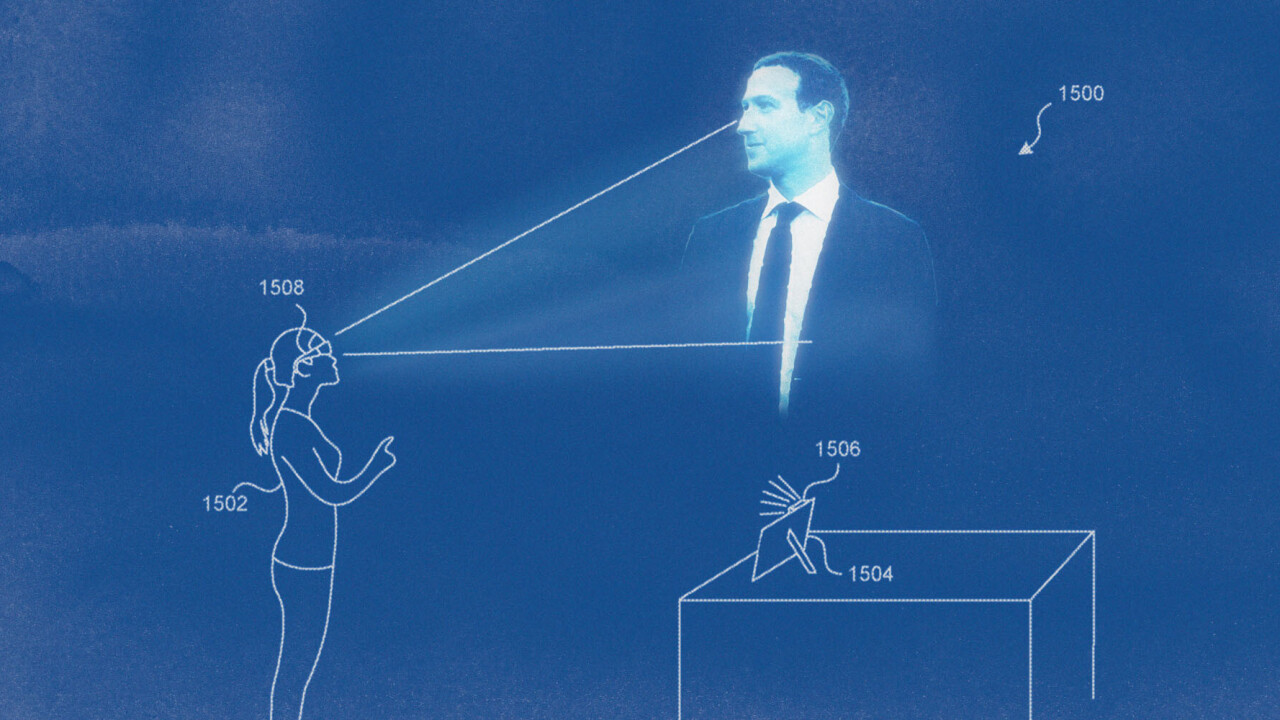
Meta, then Facebook, filed a Patent Application in 2020 titled 3D Conversations in an Artificial Reality Environment. Specifically, the application outlines a pipeline for capturing and transmitting 3D representations of callers, “allowing conversation participants to appear as if face-to-face.” 


Are we most creative when we're alone?

Here’s what the experts say


To be clear: this is a patent application that’s recently been made public; the patent hasn’t been granted yet.


What exactly does Meta mean by ‘3D’ conversations?

The patent is written in broad language covering a multitude of devices and use cases, but the gist is that Meta is trying to call dibs on a process for capturing and transmitting your body in 3D — whether to be viewed on an AR headset, a phone, or some newfangled future technology. 


In other words, the goal is to make it feel like the other person is in the same room as you.


But video calls are pretty good. What does 3D bring to the table?

Meta’s patent suggests it is interested in using realistic 3D depictions to communicate body language for more natural conversations. This is contrasted with typical video calls, which tend to only focus on the face.


“Understanding body language and context can be difficult with only a two-dimensional (“2D”) representation of a sender. Further, communication often relies on interpersonal interactions, such as spatial movements between participants. Yet communication over video call does not provide the ability for participants to move relative to each other, as the point of view is fixed to the sender’s camera. In addition, the limitation of video calling on a flat panel display introduces an intrusive layer of technology that can distract from communication and diminishes the perception of in-person communication.”


But this patent doesn’t deal with cartoony leg-less avatars. Instead, the goal is to capture real depth data from participants and transmit their likeness as realistically as possible: imitating real-life conversation is the goal. 


So is Meta cooking up a holographic device?

No. Well, it might be, but the patent doesn’t specify that. Instead, Meta seems more concerned with how that 3D data is captured, transmitted, and rendered.


Notably, the patent says these 3D conversations can potentially happen on pretty much any display imaginable, from mixed reality glasses to phones, to light-field displays, to mist screens to… yes, actual holograms.


Meta seems to be interested in creating the backend and platform that allows 3D calls to happen in the first place.


That said, while there’s no mention of specific products that might leverage this 3D conversation technology, we know Meta is working on everything from AR glasses to a metaverse-friendly smartwatch. And of course, the company does already make the most popular VR headsets in the world.


How can these conversations look realistic if I’m wearing a headset?

It’s hard to have a conversation that feels ‘face-to-face’ if one or more of the participants is wearing an AR or VR headset. To that, Meta has a solution: AI.


The company describes how AI filters could be applied for the “removal of artificial reality devices the sending user may be wearing,” letting your beautiful mug shine through in your 3D calls. How well that would work when wearing a bulky VR headset is anyone’s guess.


Meta also notes that filters can remove callers’ backgrounds to make them look like they are occupying the same space.


How can 3D conversations be transmitted on 2D devices?


On 2D displays, you obviously wouldn’t get a true 3D representation, but instead might have an effect more akin to Facebook’s 3D photos or existing AR filters. Your eyes wouldn’t be able to see true stereoscopic depth, but you should be able to move around the person you are talking to like an AR object.


All that 3D information would use a ton of data, wouldn’t it?

Fancy compression algorithms aside, Meta notes that the 3D representations don’t always have to be pixel-perfect versions of you. In many cases, AI or pre-stored 3D models of you could fill in the blanks.


“In some cases, part or all of the 3D representation may not be direct translations of captured data, such as where none of the captured images of the sending user depict a portion of the 3D representation or where bandwidth or processing limitations did not allow sufficient time to provide a portion of the images depicting the sending user. In such cases, some or all of the 3D representation can be approximated with an avatar representation of the sending user, a machine learning estimation of the missing portion(s), or a previously captured version of the missing portion(s) of the sending user.”


Meta also describes how if certain parts of the body are occluded by objects or are outside the camera’s field of view, they might be digitally reconstructed using AI as well. And similar to how we have compression for existing video calls, Meta’s technology could change the polygon count and overall quality of your 3D model depending on which devices are involved in the call.


What does this say about Meta’s plans?

A lot. Or nothing. But probably a lot.


A couple of years ago, I might’ve written this patent off as just another tech company trying to call dibs on some esoteric technology. But in 2022, now that Zuckerberg has gone all-in on the metaverse — and now that people seem to care about VR and AR again — it seems a given that Meta is trying to make conversations in XR a thing.


Again, I need to caution that this is just a patent, and tech companies file patents that never come to fruition all the time. The patent is light on specifics, but instead broadly posits numerous ways in which 3D conversations could be adapted to work on all sorts of devices.


But it’s that broadness that makes it interesting too. Right now, one of the biggest hurdles for Zuckerberg’s vision of the metaverse is the fragmentation between virtual and real spaces.


Virtual spaces allow for infinite flexibility but require bulky, expensive headsets that isolate you from those around you. And there’s always going to be a subset of the population that simply doesn’t care for XR experiences – 2D devices are good enough for them.


But if the metaverse is going to become a thing, conversations can’t only happen on VR or AR headsets — at least not any time soon. There needs to be a way to allow conversations and interactions to happen across device types.


Granted, Meta isn’t the only company working on 3D calls. Google has Starline, Cisco has Webex Hologram, and Microsoft has its Mesh platform. But given Meta’s existing dominance across social platforms and VR experiences, it’s better positioned than anyone else to create the connective tissue between 3D and 2D spaces.

Featured

[Featured][recentbylabel]

Featured

[Featured][recentbylabel]
Notification
This is just an example, you can fill it later with your own note.
Done